|
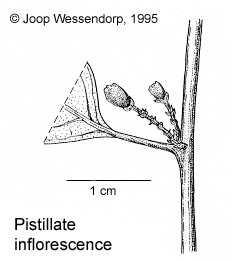
1a. |
|
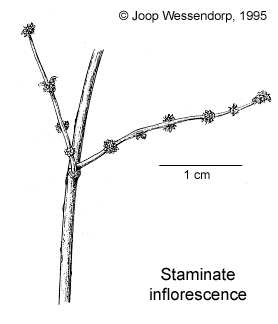
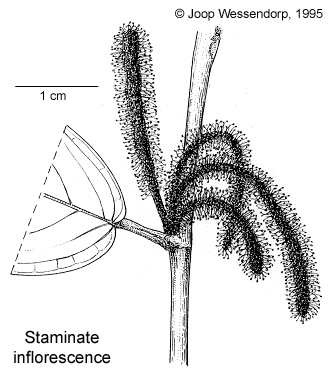
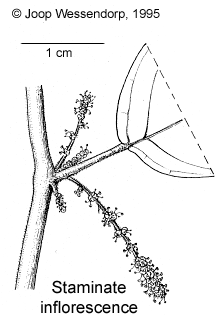
Staminate inflorescences strongly interrupted; all individual glomerules
distinct, widely set along the rachis (click picture)
|
 |
|
2 |
|
1b. |
|
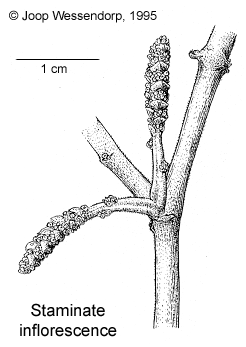
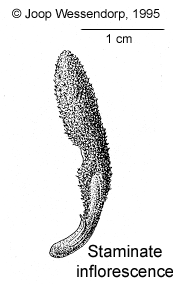
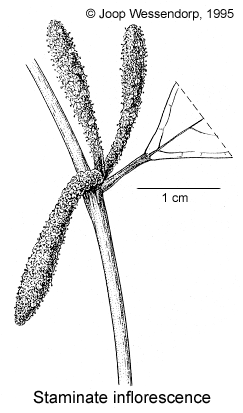
Staminate inflorescences continuous to more or less interrupted at base;
individual glomerules at least at apex of rachis indistinct, not or only
slightly spaced
(click picture) |
 |
|
11 |
|
2a. |
Branchlets, petioles and leaves completely glabrous |
3 |
|
2b. |
Branchlet, petioles and leaves on midrib beneath sparsely puberulous |
6 |
|
3a. |
Leaves
6.5–18 cm long, smooth or young ones irregularly lowly granular beneath |
4 |
|
3b. |
Leaves
13–32 cm long, strongly white-granular beneath on nervation only |
14. A. chondroneura |
|
4a. |
Leaf:
nerves 5–10 pairs, drying approximately the same shade of
grey-yellow-green as the lamina. Inflorescences: glomerules more or less
evenly set along the rachis |
5 |
|
4b. |
Leaf:
nerves 9–12 pairs, drying often beneath lighter green than the lamina.
Inflorescences: glomerules apically less spaced than at base |
56. A. sarawakensis |
|
5a. |
Leaf:
nerves 5–8 pairs; texture slightly leathery, drying dull greyish green
to dark green; dots densely set, greyish |
51. A. prainiana |
|
5b. |
Leaf:
nerves 7–10 pairs; texture papery, drying shiny yellowish green or dark
green; dots indistinct |
66. A. symplocoides |
|
6a. |
Stipules (narrowly) ovate, sometimes slightly oblique, or falcate;
caducous, but still present in young stages. Leaf: base cuneate to
rounded; nerves 6–13 pairs |
7 |
|
6b. |
Stipules falcate, persistent. Leaf: base emarginate-truncate; nerves
14–23 pairs |
25. A. grandistipula |
|
7a. |
Branchlets sparsely tomentose to subglabrous. Leaves only sparsely
tomentose to subglabrous beneath; drying yellowish green on both sides |
8 |
|
7b. |
Branchlets tomentose. Leaf: at least (sparsely) tomentose beneath;
drying dark brownish to greenish brownish above, brown beneath |
9 |
|
8a. |
Leaves
5.5–13.5 cm long; dots irregularly densely set, greyish, fading.
Inflorescences clustered up to 5 together, 7–17 mm long, 1.5–2 mm diam.;
glomerules globose. — North Borneo, Mt Kinabalu and environments, above
1000 m |
23. A. fulvovittata |
|
8b. |
Leaves
10–19 cm long; dots absent. Inflorescences clustered up to 15 together,
9–35 mm long, 0.5–1.5 mm diam.; glomerules ellipsoid. — Sarawak, along
or partly in rivers or at tidal influence zones |
62. A. stenostachys |
|
9a. |
Stipules (narrowly) ovate, present in young stages. Leaf: marginal
glands few, small, indistinct; texture rather papery; (sparsely) hirsute
on both sides. Inflorescence rachis 0.3–0.5 mm diam.; glomerules 0.8–1.2
by 0.5–0.8 mm |
10 |
|
9b. |
Stipules falcate, often early caducous. Leaf: marginal glands many,
large, distinct; texture rather leathery; only (sparsely) tomentose
beneath. Inflorescence rachis 0.8–1.5 mm diam.; glomerules 1.5–2.5 by
1.5–2.5 mm |
29. A. illustris |
|
10a. |
Leaves
11–25 by 5–11 cm. Inflorescences 10–20 clustered together, 11–47 mm long |
19. A. elmeri |
|
10b. |
Leaves
5.5–13 by 2–4.5 cm. Inflorescences 2–5 clustered together, 7–12 mm long |
55. A. rhacostyla |
|
11a. |
|
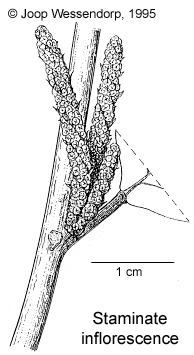
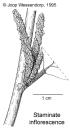
Staminate rachis continuously floriferous from apex to base, though
individual glomerules sometimes minutely spaced; peduncle absent, seldom
minute
(click picture) |
 |
|
12 |
|
11b. |
|
Staminate rachis at least at base free of flowers;
peduncle more than 1 mm long
(click picture) |
|
|
14 |
|
12a. |
Petiole
and leaf at least beneath puberulous. Inflorescences continuous,
glomerules uninterrupted, indistinct |
13 |
|
12b. |
Petiole
and leaf completely glabrous. Inflorescences continuous, glomerules
slightly interrupted, distinct |
37. A. lucida |
|
13a. |
|
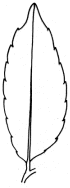
Leaves
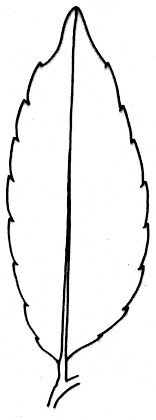
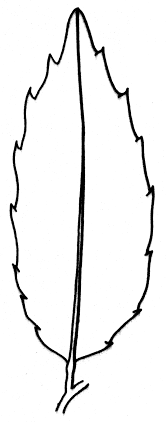
12–28 cm long; margin (lowly) glandular-crenate
(click picture); only sparsely hirsute beneath;
drying green or brown, blackening with age; disc-like glands absent |
 |
|
43. A. nigricans |
|
13b. |
|
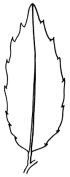
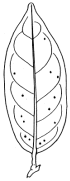
Leaves
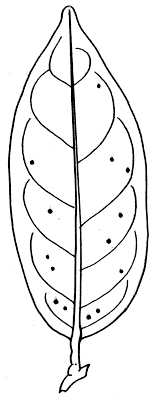
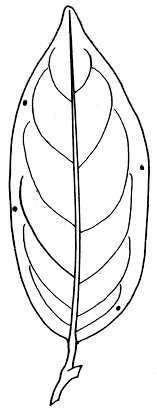
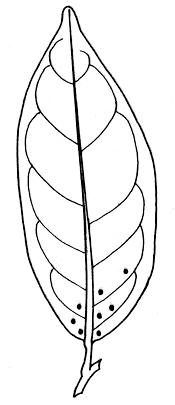
5–16 cm long; margin more or less distinctly glandular-serrate
(click left picture); (sparsely) puberulous on both sides;
drying brownish or yellowish green, not blackening with age; disc-like
glands many, scattered in centre of marginal vein arches
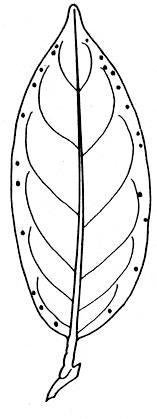
(click right picture) |
  |
|
46c.
A. octandra var.
malesiana |
|
14a. |
|
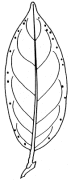
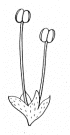
Stipules falcate, persistent or caducous. Leaf: marginal glands in
margin, small and indistinct; disc-like glands often present, distinct,
along the margin
(click upper left picture);
nerves 9–18 pairs. Inflorescences (when mature) brush-like due to
exserted stamens, glomerules indistinct, densely set at apical 3/4–7/8
of the rachis
(click lower picture).
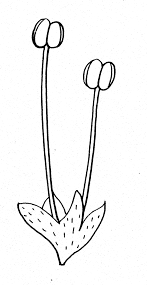
Flowers: stamens strongly exserted, c. thrice as long as the sepals
(click upper right picture); anthers 0.1–0.2 mm long |
 |
|
15 |
|
14b. |
|
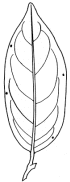
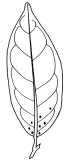
Stipules narrowly ovate, oblique or not, seldom falcate (but then leaf
nerves up to 9 pairs or inflorescences interrupted), caducous but
sometimes still present in young stages. Leaf: marginal glands often
rather distinct; disc-like glands absent or occasionally present, then
indistinct, along margin
(click upper left picture) ,
seldom scattered at base within marginal vein arches
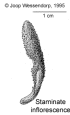
(click upper right picture). Inflorescences (when mature) not
brush-like, glomerules at least at base distinct, slightly to strongly
interrupted (if glomerules continuous and indistinct, then either
flowers laxly set or stamens not exserted
(click lower left picture) or inflorescences
clavate-shaped)
(click lower richt picture).
Stamens not to slightly exserted (up to twice as long as the sepals), if
exserted, then anthers 0.3–0.6 mm long |
 |
|
19 |
|
15a. |
Leaves
glabrous or only beneath sparsely hairy; nerves slightly prominent to
flat above |
16 |
|
15b. |
Leaves:
above at least on midrib (sparsely) hirsute, beneath (sparsely) hirsute;
nerves more or less sunken above |
17 |
|
16a. |
Stipules 6–20 by 11–37 mm, often long persistent. Petiole: upper
pulvinus swollen, 5–11 by 3–6 mm. Leaves 14–47 cm long; base cordate;
nerves raised beneath, not fading towards the margin |
8. A. benthamiana |
|
16b. |
Stipules 4–8 by 11–18 mm, present in young stages. Petiole: upper
pulvinus distinct, but not extremely so, 2–6 by 1.5–2.5 mm. Leaves 8–25
cm long; base emarginate to rounded; nerves prominent beneath, fading
towards the margin |
20. A. falcifera |
|
17a. |
Nervation strongly sunken above, giving the leaf a bullate appearance |
18 |
|
17b. |
Only
nerves sunken, sometimes near margin and apex some veins sunken,
otherwise leaves flat, smooth above |
38. A. lunata |
|
18a. |
Leaves
9–20 cm long |
11. A. bullatissima |
|
18b. |
Leaves
21–29 cm long |
64. A. sylvestri |
|
19a. |
Branchlets and petiole very sparsely puberulous to glabrous; leaves
completely glabrous or only very sparsely puberulous on midrib beneath
near base. Inflorescences: rachis (sub)glabrous |
20 |
|
19b. |
Branchlets and petiole (sparsely) puberulous; leaves at least on midrib
beneath (sparsely) puberulous to tomentose. Inflorescences: rachis
(sparsely) puberulous to tomentose |
25 |
|
20a. |
|
Leaves
6–20 by 1.5–8 cm. Inflorescences cylindric or interrupted
(click picture),
5–41 mm long, 0.8–3.5 mm diameter |
|
|
21 |
|
20b. |
|
Leaves
15–33 by 5–13 cm. Inflorescences clavate
(click picture), 12–36 mm long, apical head 3–8 mm
diameter |
|
|
45. A. nitida |
|
21a. |
Leaf:
apex acuminate to cuspidate; texture papery or leathery; drying greyish
to yellowish green on both sides, sometimes greenish or brownish above,
brown beneath but then apex acuminate and texture leathery; nerves 7–12
pairs. Glomerules interrupted at base, or if only minutely spaced at
base, then inflorescences more then 2 mm diam.; inflorescences drying
yellowish or brownish |
22 |
|
21b. |
Leaf:
apex cuspidate; texture papery; drying greenish or bluish brown above,
often blackening, (light) brown beneath; nerves 4–6 pairs. Glomerules
only at base slightly spaced and inflorescences 1–1.3 mm diam.;
inflorescences drying dark brownish |
3. A. antennifera |
|
22a. |
Leaf:
texture papery, dull; drying greyish green to yellowish green on both
sides; dots absent or indistinct. Glomerules 0.8–2 mm long. Flowers
drying yellowish; stamens not to slightly exserted, shorter than to
slightly longer than sepals |
23 |
|
22b. |
|
Leaf:
texture leathery, shiny; drying greenish to brownish above, brownish
beneath; dots often irregularly set, distinct, but often fading.
Glomerules 2–3 mm long. Flowers drying brownish; stamens exserted, c.
twice as long as sepals
(click picture) |
 |
|
12. A. caloneura |
|
23a. |
Branchlets, petiole, and leaf on midrib beneath very sparsely
puberulous. Inflorescences 5–22 mm long, 1–3.5 mm diam.; glomerules
ellipsoid, at base interrupted, distinct, apically continuous,
indistinct |
24 |
|
23b. |
Branchlets, petiole, and leaf completely glabrous. Inflorescences 14–41
mm long, 0.8–1.2 mm diam.; glomerules subglobose, strongly interrupted
at base, at apex less, but distinct throughout |
56. A. sarawakensis |
|
24a. |
|
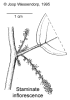
Inflorescences 1–1.5 mm diam.; glomerules rather distinctly interrupted
at base of rachis
(click picture) |
 |
|
6. A. banahaensis |
|
24b. |
|
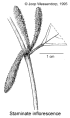
Inflorescences 2–3.5 mm diam.; glomerules at base only slightly
interrupted
(click picture) |
 |
|
22. A. frutescens |
|
25a. |
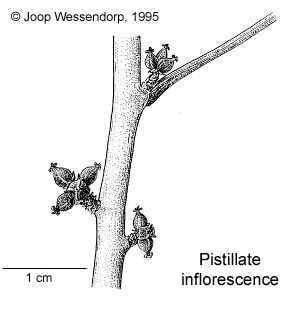
Inflorescences 1–6 clustered together; glomerules subglobose to
ellipsoid, distinct to indistinct, (slightly) interrupted at base,
decreasingly spaced towards the apex |
26 |
|
25b. |
Inflorescences 4–14 clustered together; glomerules ellipsoid, distinct,
spaced rather evenly interruptedly along the rachis. — Inflorescences
9–35 mm long, 0.5–1.5 diam.; glomerules 1–1.5 by 0.5–0.8 mm. Sarawak,
along or partly in rivers or at tidal zones |
62. A. stenostachys |
|
26a. |
|
Leaves
drying greyish green to yellowish green. Inflorescences 2–9 mm diam.;
glomerules clustered strongly apically on fleshy rachis
(click picture); drying yellowish |
|
|
27 |
|
26b. |
|
Leaves
drying greenish or brownish. Inflorescences 0.5–2.2 mm diam.; glomerules
not clustered densely apically
(click picture);
drying light to dark brown |
|
|
28 |
|
27a. |
Branchlets and leaves tomentose. Leaf: nerves 10–14 pairs.
Inflorescences 12–32 mm long, tomentose; apical head 5–9 mm diameter |
15. A. confusa |
|
27b. |
Branchlets and leaves sparsely tomentose. Leaf: nerves 8–10 pairs.
Inflorescences 5–22 mm long, (sparsely) tomentose; apical head 2–3.5 mm
diameter |
22. A. frutescens |
|
28a. |
Leaves:
nerves 4–10 pairs |
29 |
|
28b. |
Leaves:
nerves 10–17 pairs |
35 |
|
29a. |
Leaf:
apex acuminate to cuspidate; texture (rather) leathery; dots blackish,
often distinct. Inflorescences 14–57 mm long; glomerules distinct, at
least at base distinctly interrupted, 1.5–2.5 by 1.5–2 mm |
30 |
|
29b. |
Leaf:
apex cuspidate to caudate; texture (rather) papery; dots greyish, often
indistinct or fading. Inflorescences 5–23 mm long; glomerules distinct
or not, distinctly or only slightly interrupted at base, 0.5–1.5 (seldom
up to 2.5) by 0.3–1.5 mm, or indistinct and flowers seemingly
continuously laxly set along the rachis |
31 |
|
30a. |
Stipules falcate, early caducous or still present in young stages. Leaf:
dots irregularly set, fine; midrib sparsely tomentose above.
Inflorescences: glomerules distinctly interrupted throughout. Stamens 3
or 4 |
29. A. illustris |
|
30b. |
Stipules narrowly ovate, (slightly) oblique, early caducous. Leaf: dots
densely set, large; glabrous above. Inflorescences: glomerules at base
strongly interrupted, less at apex. Stamens 2 or 3 |
42. A. nervosa |
|
31a. |
Stipules slightly asymmetric, mostly early caducous, sometimes present
in young stages. Branchlets, petiole, and leaf only on midrib beneath
sparsely puberulous |
32 |
|
31b. |
Stipules slightly to strongly oblique, present in young stages or
longer. Branchlets, petiole, and leaf at least on midrib above and
beneath (sparsely) tomentose |
33 |
|
32a. |
Petiole
7–15 mm long. Leaves drying rather shiny greenish on both sides, not
blackening with age; nerves 7–10 pairs |
1. A. alia |
|
32b. |
Petiole
4–8 mm long. Leaves drying above greenish to brown, beneath brown,
blackening with age; nerves 4–6 pairs |
3. A. antennifera |
|
33a. |
|
Stipules slightly to strongly oblique, caducous, present in young stages
only. Leaves above only on midrib (sparsely) puberulous to (sparsely)
tomentose. Inflorescences: glomerules at least at base distinct,
globose, compact
(click picture);
stamens not to slightly exserted |
|
|
34 |
|
33b. |
|
Stipules strongly oblique, often rather long persistent. Leaves
above sparsely hirsute. Inflorescences: glomerules lax,
indistinct, flowers seemingly continuously laxly set along the
rachis (click picture); stamens exserted |
|
|
30. A. lagenocarpa |
|
34a. |
Leaf:
base often slightly attenuate; drying greenish grey to greenish brown
above, greyish brown beneath; nerves 6–8 pairs; nervation laxly
reticulate, slightly scalariform. Inflorescences 5–9 mm long; glomerules
c. 1 by 0.5 mm |
26. A. granularis |
|
34b. |
Leaf:
base cuneate to emarginate; drying (dark) greenish brown above, brown
beneath; nerves 8–17 pairs; nervation distinct, often distinctly
reticulate-scalariform. Inflorescences 9–23 mm long; glomerules 1–2.5 by
1–1.5 mm |
63. A. subcaudata |
|
35a. |
Branchlets (sparsely) tomentose. Petiole 5–38 mm long, (sparsely)
tomentose. Leaves at least (sparsely) tomentose beneath |
36 |
|
35b. |
Branchlets sparsely puberulous. Petiole 14–51 mm long, sparsely
puberulous. Leaves only on midrib sparsely puberulous beneath |
4. A. arborea |
|
36a. |
|
Stipules narrowly ovate, sometimes oblique. Petiole 5–17 mm long.
Leaves: texture (rather) papery; dots indistinct or fading. Glomerules
interrupted at base only, rather continuously set apically
(click picture), subglobose or ellipsoid, 1–2.5 by
1–1.5 mm |
|
|
37 |
|
36b. |
Stipules falcate. Petiole 8–38 mm long. Leaves: texture rather leathery;
dots irregularly set, fine. Glomerules mostly distinctly interrupted
throughout, globose, 1.5–2.5 by 1.5–2.5 mm |
29. A. illustris |
|
37a. |
Leaf:
nerves 10–12 pairs; nervation laxly reticulate. Inflorescences 18–47 mm
long; glomerules ellipsoid |
7. A. basilanensis |
|
37b. |
Leaf:
nerves 8–17 pairs; nervation densely reticulate, (slightly) scalariform.
Inflorescences 9–23 mm long; glomerules (sub)globose |
63. A. subcaudata |
|
1a. |
Ovary
(mostly) 2-locular |
2 |
|
1b. |
Ovary
(mostly) 3- or more locular |
17 |
|
2a. |
Septae
and column (sparsely) hairy |
3 |
|
2b. |
Septae
and column glabrous |
5 |
|
3a. |
Petiole
and leaves at least sparsely puberulous beneath. Ovary (sparsely)
tomentose. Fruit ovoid to ellipsoid, (sparsely) tomentose |
4 |
|
3b. |
Petiole
and leaves completely glabrous. Ovary glabrous. Fruit globose, glabrous |
37a.
A. lucida var.
lucida |
|
4a. |
|
Leaves
12–28 cm long; margin (lowly) glandular-crenate
(click picture); only sparsely hirsute beneath;
drying green or brown, blackening with age; disc-like glands
absent. Fruits drying dark brown to black with light sutures |
|
|
43. A. nigricans |
|
4b. |
|
Leaves
5–16 cm long; margin more or less distinctly glandular-serrate
(click left picture); (sparsely) puberulous on both sides;
drying brownish or yellowish green, not blackening with age; disc-like
glands many, scattered within marginal vein arches
(click right picture). Fruits drying orange-brown |
|
|
46c.
A. octandra var.
malesiana |
|
5a. |
Ovary
and fruit (sub)sessile, pedicel up to 0.5 mm long |
6 |
|
5b. |
Ovary
and fruit distinctly pedicelled, pedicel more than 1 mm long |
11 |
|
6a. |
Stipules early caducous or present in young stages only, (narrowly)
ovate, sometimes oblique. Ovary ellipsoid, densely to sparsely sericeous
or puberulous; stigmas 0.5–1.5 mm long. Fruits narrowly ovoid or
ellipsoid, seldom globose, not beaked, (sparsely) tomentose to
subglabrous |
7 |
|
6b. |
|
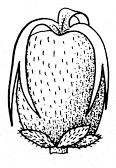
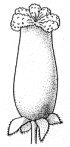
Stipules often rather persistent, narrowly
ovate, strongly oblique to falcate. Ovary narrowly ovoid, flask-shaped
to subfusiform, densely tomentose; stigmas 4.5–6 mm long
(click left picture).
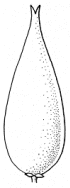
Fruits flask-shaped to subfusiform, beaked, (sparsely) tomentose
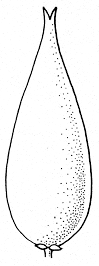
(click right picture) |
  |
|
30. A. lagenocarpa |
|
7a. |
|
Stipules (narrowly) ovate, symmetric. Flowers and fruits rather laxly
set along the whole rachis
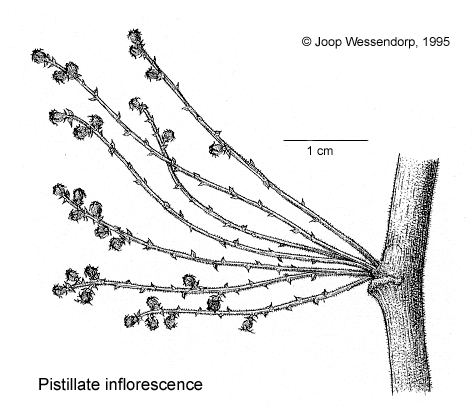
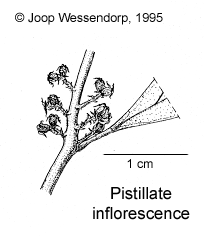
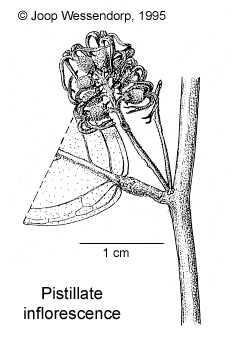
(click picture) |
 |
|
8 |
|
7b. |
|
Stipules narrowly ovate, more or less oblique. Flowers and fruits rather
densely set at least at apical part of the rachis
(click picture) |
 |
|
9 |
|
8a. |
Leaves
11–25 by 5–11 cm. Inflorescences 10–42 mm long; stigmas flattened on top
and to the sides of the ovary, densely laciniate. Infructescences 16–57
mm long |
19. A. elmeri |
|
8b. |
Leaves
5.5–13 by 2–4.5 cm. Inflorescences 10–23 mm long; stigmas at first
ascending from top to an apical bunch before flattening to the sides of
the ovary, ribbed and papillate. Infructescences 12–33 mm long |
55. A. rhacostyla |
|
9a. |
Leaf:
nerves 6–10 pairs. Inflorescences 0.5–0.8 mm diam., (sparsely)
sericeous. Ovary sparsely sericeous at base, glabrescent; stigma lowly
papillate to laciniate. Fruits sparsely sericeous at base only,
glabrescent, granular |
10 |
|
9b. |
Leaf:
nerves 8–17 pairs. Inflorescences 1.5–2 mm diam., tomentose. Ovary
densely sericeous; stigmas densely laciniate. Fruits (sparsely)
sericeous, punctate |
63. A. subcaudata |
|
10a. |
Stipules slightly asymmetric, early caducous, sometimes still present in
young stages. Leaves drying rather shiny greyish green on both sides;
marginal glands distinct, black to grey; above glabrous, beneath only
midrib and nerves puberulous |
1. A. alia |
|
10b. |
Stipules slightly to strongly oblique, present in young stages. Leaves
drying greenish grey to greenish brown above, greyish brown beneath;
marginal glands indistinct; above at least midrib sparsely puberulous,
beneath sparsely puberulous |
26. A. granularis |
|
11a. |
Branchlets, petiole, and leaf completely glabrous. Leaves drying
yellowish to greyish green on both sides. Ovary glabrous; stigmas 0.2–1
mm long. Fruits glabrous, drying yellowish; pericarp 0.2–1 mm thick |
12 |
|
11b. |
Branchlets, petiole, and leaf at least on midrib beneath sparsely
puberulous. Leaves drying dark greyish, greenish, bluish, or brownish
above, brownish beneath. Ovary sericeous to sparsely puberulous at base
only, if glabrous than stigmas longer than 1.5 mm; stigmas 0.8–5.5 mm
long. Fruits sericeous to glabrous, drying dark to orange-brown;
pericarp 0.5–1.5 mm thick |
14 |
|
12a. |
Leaf:
nerves 7–11 pairs, regularly set; dots indistinct. Flowers up to 11;
ovary not lobed. Fruits ellipsoid or fusiform, 9–13 by 8–11 mm or 14–17
by 7–10 mm, drying smooth to punctulate; apex of endocarp acute |
13 (66.
A. symplocoides) |
|
12b. |
Leaf:
nerves 5–9 pairs, with often larger gap between 3rd and 4th pair; dots
densely set, fine, greyish. Flowers up to 5; ovary lowly lobed. Fruits
ovoid, 12–15 by 10–13 mm, often drying irregularly ridged and
corrugated; apex of endocarp caudate |
52. A. prainiana |
|
13a. |
Fruits
fusiform, 14–17 mm long; pedicel 11–35 mm long |
66b.
A. symplocoides var.
chalarocarpa |
|
13b. |
Fruits
ovoid, 9–13 mm long; pedicel 2–7 mm long |
66a.
A. symplocoides var.
symplocoides |
|
14a. |
Leaf:
dots indistinct or fading, if distinct then laxly irregularly set.
Flower: pedicel 1–3 mm long; ovary (narrowly) ovoid; stigmas more or
less raised, 1.5–5.5 mm long, free, perpendicular. Fruit (narrowly)
ovoid to slightly flask-shaped or fusiform, slightly stiped and/or
beaked |
15 |
|
14b. |
Leaf:
dots densely set, large, black. Flower: pedicel 0.8–1 mm long; ovary
ellipsoid; stigmas sessile, 0.8–1.2 mm long. Fruit ellipsoid to
subglobose, not stiped nor beaked |
42. A. nervosa |
|
15a. |
Leaf:
apex acuminate; drying greenish or reddish brown above; nerves 7–12
pairs. Ovary 2- and 3-locular; stigmas 1.5–2.5 mm long. Fruits not or
only very slightly stiped, 13–22 mm long; pericarp 0.8–1.5 mm thick |
16 |
|
15b. |
Leaf:
apex cuspidate; drying dark greenish blue above; nerves 4–6 pairs. Ovary
2-locular, never 3-locular; stigmas 2.5–5.5 mm long. Fruits shortly
stiped, 7–10 mm long; pericarp 0.5–0.8 mm thick |
3. A. antennifera |
|
16a. |
Branchlets, petioles, and leaves only on midrib and nerves beneath very
sparsely puberulous, glabrescent. Leaf: texture leathery; dots
irregularly set, distinct. Ovary rugose, (sub)glabrous. Fruits
(sub)glabrous; apex of endocarp acute |
12. A. caloneura |
|
16b. |
Branchlets, petioles and leaves beneath (sparely) tomentose. Leaf:
texture papery; dots often indistinct. Ovary smooth, (sparsely)
sericeous. Fruits sparsely puberulous; apex of endocarp caudate |
7. A. basilanensis |
|
17a. |
|
18 |
|
17b. |
|
Leaf:
disc-like glands scattered within the marginal vein arches
(click left picture). Flowers and fruits densely set along
the rachis
(click right pictures),
sessile. Fruit: septae and column sparsely sericeous |
 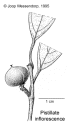 |
|
37d.
A. lucida var.
trilocularis |
|
18a. |
|
Flowers
and fruits subsessile, densely set only along apical 7/8–3/4 of the
rachis
(click left picture).
Stigmas sessile, smooth, flattened to the sides of the ovary
(click central picture). Fruits ovoid with stigma remnant
ascending. Leaf: disc-like glands distinct, along the margin
(click right picture) |
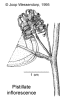 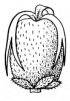 |
|
19 |
|
18b. |
|
Flowers
and fruits distinctly pedicelled, set rather laxly along the whole
rachis
(click upper left picture)
or singly apically
(click upper right picture).
Stigmas sessile to raised, ribbed to laciniate, perpendicular to, or
ascending from the sides of the ovary. Fruits ellipsoid to globose, if
ovoid, then distinctly pedicelled and stigma remnants usually not
ascending. Leaf: disc-like glands absent, or only a few distinct ones
along the margin, sometimes few scattered near base within the marginal
vein arches
(click lower pictures) |
 
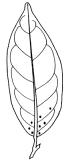 |
|
23 |
|
19a. |
Leaves
glabrous or only sparsely hairy beneath; nerves slightly prominent to
flat above |
20 |
|
19b. |
Leaves
at least on midrib and beneath (sparsely) hirsute above; nerves more or
less sunken above |
21 |
|
20a. |
Stipules 6–20 by 11–37 mm, often long persistent. Petiole upper pulvinus
swollen, 5–11 by 3–6 mm. Leaves 14–47 cm long; base cordate; nerves
beneath raised, not fading towards the margin |
8. A. benthamiana |
|
20b. |
Stipules 4–8 by 11–18 mm, present in young stages. Petiole upper
pulvinus distinct, but not extremely so, 2–6 by 1.5–2.5 mm. Leaves 8–25
cm long; base emarginate to rounded; nerves beneath prominent, fading
towards the margin |
20. A. falcifera |
|
21a. |
Nerves
and venation strongly impressed above and giving the leaf a bullate
appearance |
22 |
|
21b. |
Only
nerves impressed, sometimes near margin and apex some veins impressed,
leaves flat, smooth above |
38. A. lunata |
|
22a. |
Leaves
9–20 cm long |
11. A. bullatissima |
|
22b. |
Leaves
21–29 cm long |
64. A. sylvestri |
|
23a. |
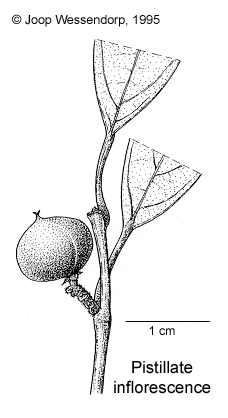
|
Inflorescences and infructescences bearing usually only one single
flower or fruit respectively on top of the rachis
(click picture) (seldom few clustered apically).
Stigmas broad, raised or sunken (if narrow, then altitude > 1000
m, Mt Kinabalu or other mountains in northern Borneo). — Fruit
sometimes globose with sunken stigmas and thick fleshy pericarp |
|
|
24 |
|
23b. |
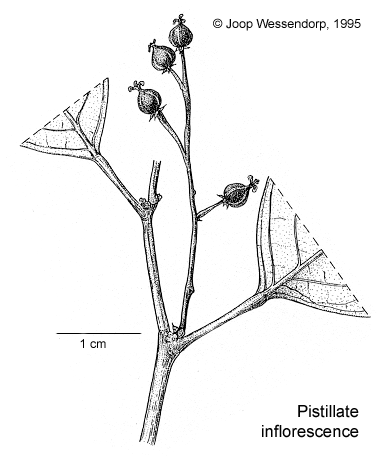
|
Inflorescences and infructescences bearing more than one flower or fruit
respectively along the rachis
(click picture).
Stigmas narrow |
|
|
30 |
|
24a. |
|
Fruits
ellipsoid or (broadly) ovoid with prominent stigmas, seldom subglobose;
pericarp 0.5–1.5 mm thick. Ovary ovoid, stigmas slightly raised, ribbed
and margins laciniate, or cylindric and stigmas broad and prominent
(click picture); stigmas 1–2 mm long |
|
|
25 |
|
24b. |
|
Fruits
globose with sunken stigmas
(click left picture),
seldom ovoid, but then sutures ridged; pericarp 0.5–6 mm thick. Ovary
globose, stigmas broad, flat, 0.5–1 mm long, slightly ribbed or laxly
laciniate
(click right picture) |
 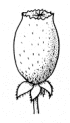 |
|
27 |
|
25a. |
Branchlets, petiole, and leaves on midrib and nerves beneath sparsely
hairy. Inflorescences and flowers (sparsely) puberulous to tomentose.
Infructescences and pedicels sparsely puberulous. Fruits (broadly) ovoid
to globose, 8–12 mm long; apex of endocarp acute |
26 |
|
25b. |
Branchlets, petiole, and leaves completely glabrous. Inflorescences and
flowers subglabrous. Infructescences and pedicels glabrous. Fruits ovoid
to ellipsoid, 13–21 mm long; apex of endocarp caudate |
56. A. sarawakensis |
|
26a. |
Leaf:
5.5–13.5 cm long; dots irregularly densely set, greyish, fading. Stigmas
slightly raised, narrow, not prominent. Fruits glabrous, drying brownish
with light yellow-brown sutures; stigmas narrow, not extremely thick. —
North Borneo, Mt Kinabalu and environments, above 1000 m |
23. A. fulvovittata |
|
26b. |
Leaf:
10–19 cm long; dots absent. Stigmas sessile, broad, prominent. Fruits
sometimes sparsely puberulous near base, drying light yellowish; stigmas
broad, thick. — Sarawak, along or partly in rivers or tidal zones |
62. A. stenostachys |
|
27a. |
Branchlets and leaves (sparsely) hairy to glabrous. Leaf: nerves 8–13
pairs. Inflorescences sparsely tomentose to subglabrous. Ovary sparsely
puberulous to glabrous. Fruits sparsely puberulous to glabrous |
28 |
|
27b. |
Branchlets and leaves tomentose. Leaf: nerves 10–14 pairs.
Inflorescences tomentose. Ovary puberulous. Fruits (sparsely) puberulous |
15. A. confusa |
|
28a. |
Branchlets and leaves (very) sparsely puberulous, glabrescent. Leaves
6.5–21 cm long, papery; nerves 8–11 pairs. Ovary mostly 3-locular,
occasionally 4-locular, sparsely puberulous to glabrous. Fruits 9–18 mm
long; pericarp 0.5–3(–6) mm thick |
29 |
|
28b. |
Branchlets and leaves completely glabrous. Leaves 15–33 cm long,
leathery; nerves 9–13 pairs. Ovary 4–6-locular, seldom 7-locular,
glabrous. Fruits 21–28 mm long; pericarp 3–5 mm thick |
45. A. nitida |
|
29a. |
Branchlets and leaves beneath very sparsely puberulous, glabrescent.
Inflorescences subglabrous. Ovary glabrous; stigmas papillate to
laciniate. Infructescences subglabrous. Fruits young ones ridged, mature
ones smooth, glabrous, stigmas not sunken |
6. A. banahaensis |
|
29b. |
Branchlets and leaves sparsely puberulous, glabrescent. Inflorescences
(sparsely) tomentose. Ovary sparsely hairy, glabrescent; stigmas ribbed.
Infructescences (sparsely) tomentose. Fruits young and mature ones
smooth, sparsely hairy, glabrescent, stigmas flat to sunken
Mostly A. frutescens
is distinct by its stronger indument and smaller fruits from the typical
subglabrous and large-fruited A. banahaensis. However, in places
were A. banahaensis and A. frutescens co-occur, as in
Sabah, the differences between the species fade: A. frutescens
becomes glabrescent and the fruit of A. banahaensis does not get
as large as in, e.g., Mindanao. |
22. A. frutescens |
|
30a. |
Branchlets, petioles, and leaves completely glabrous. Leaves drying
greyish green to yellowish green on both sides. Ovary glabrous; stigma
up to 1 mm long. Fruits glabrous, yellowish when dry |
31 |
|
30b. |
Branchlets, petioles, and leaves at least on midrib beneath very
sparsely puberulous to tomentose. Leaves drying (dark) greyish green,
bluish green, or brownish above, brownish beneath. Ovary at least at
base sparsely puberulous (if (sub)glabrous, then stigmas 1.5–2.5 mm
long, or nerves 14–23 pairs); stigmas 0.7–2.5 mm long. Fruits sparsely
puberulous to glabrous, brownish to black when dry |
34 |
|
31a. |
Leaves
6.5–18 cm long, smooth or young ones irregularly lowly granular beneath |
32 |
|
31b. |
Leaves
13–32 cm long, strongly white-granular beneath on nervation only |
14. A. chondroneura |
|
32a. |
Leaf:
nerves 7–11 pairs, regularly set; dots indistinct. Flowers up to 11;
ovary not lobed. Fruits ellipsoid or fusiform, 9–13 by 8–11 mm or 14–17
by 7–10 mm, drying smooth to punctulate; apex of endocarp acute |
33 (66.
A. symplocoides) |
|
32b. |
Leaf:
nerves 5–9 pairs, with often larger gap between 3rd and 4th pair; dots
densely set, fine, greyish. Flowers up to 5; ovary lowly lobed. Fruits
ovoid, 12–15 by 10–13 mm, often drying irregular ridged and corrugate;
apex of endocarp caudate |
51. A. prainiana |
|
33a. |
Fruits
fusiform, 14–17 mm long; pedicel 11–35 mm long |
66b.
A. symplocoides var.
chalarocarpa |
|
33b. |
Fruits
ovoid, 9–13 mm long; pedicel 2–7 mm long |
66a.
A. symplocoides var.
symplocoides |
|
34a. |
Stipules (narrowly) ovate, symmetric or slightly oblique, early caducous
(if falcate and persistent, then nerves 8–13 pairs). Leaf: base rounded
to cuneate, very base never cordate; nerves 6–16 pairs. Inflorescences
sparsely puberulous to (sparsely) tomentose. Ovary (sparsely) puberulous
to subglabrous. Fruits sparsely puberulous to glabrous; pericarp 0.8–5
mm thick |
35 |
|
34b. |
Stipules falcate, often persistent. Leaf: base emarginate or cuneate
with very base cordate; nerves 14–23 pairs. Inflorescences subglabrous.
Ovary glabrous. Fruits glabrous; pericarp 0.5–1 mm thick |
25. A. grandistipula |
|
35a. |
Petiole
6–38 mm long. Leaf: texture papery or (slightly) leathery; disc-like
absent, or few present along the margin; nerves 6–13 pairs.
Inflorescences axillary to just below the leaves |
36 |
|
35b. |
|
Petiole
14–51 mm long. Leaf: texture papery; disc-like glands often present,
along the margin
(click picture);
nerves 12–16 pairs. Inflorescences below the leaves or on the branches |
|
|
4. A. arborea |
|
36a. |
Branchlets, petioles, and leaves at least beneath (sparsely) tomentose
to (sparsely) puberulous. Ovary smooth, at base (sparsely) tomentose to
puberulous, glabrescent towards apex. Fruits sparsely puberulous |
37 |
|
36b. |
Branchlets, petioles, and leaves only on midrib and nerves beneath very
sparsely puberulous, glabrescent. Ovary rugose, (sub)glabrous. Fruits
(sub)glabrous |
12. A. caloneura |
|
37a. |
Leaf:
dots often distinct, large or small. Ovary ovoid or ellipsoid; stigmas
sessile, 0.8–2.2 mm long. Fruits ellipsoid to (sub)globose, not stiped
or beaked; apex of endocarp acute |
38 |
|
37b. |
Leaf:
dots indistinct. Ovary narrowly ovoid; stigmas slightly raised, 2–2.5 mm
long. Fruits ovoid to slightly flask-shaped, beaked, 13–19 mm long; apex
of endocarp caudate |
7. A. basilanensis |
|
38a. |
Leaf:
dots irregularly set, fine; nerves 8–13 pairs. Stipules falcate,
sometimes persistent. Flowers: sepals 3; ovary 3-locular (seldom
4-locular); stigmas 1.5–2.2 mm long. Fruits: pericarp 1–5 mm thick |
29. A. illustris |
|
38b. |
Leaf:
dots laxly set, large; nerves 6–9 pairs. Stipules caducous. Flowers:
pedicel 0.8–1 mm long; ovary 2- and 3-locular; stigmas 0.8–1.2 mm long.
Fruits: pericarp 0.8–1.5 mm thick |
42. A. nervosa |